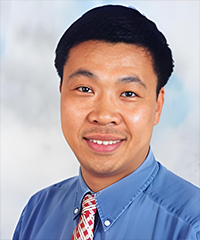
Jixin Ma
Professor, University of Greenwich, UK.
Research Interests: Artificial Intelligence, Data Science, Information Systems, Temporal Logic, Information Security, Machine Learning, Case-Based Reasoning and Pattern Recognition.
More Information >>
Dr Jixin Ma is a Full Professor of Computer Science (Artificial Intelligence) and the Director of PhD/Postgraduate Research Programme in the School of Computing and Mathematical Sciences at University of Greenwich, U.K. He has been the Director of the Centre for Computer and Computational Science and the Lead of Artificial Intelligence Research Group. Professor Ma is also a Visiting Professor of Beijing Normal University, Hainan University, Anhui University, Zhengzhou Light Industrial University and Macau City University. Professor Ma obtained his BSc and MSc of Mathematics in 1982 and 1988, respectively, and PhD of Computer Sciences in 1994. His main research areas include Artificial Intelligence, Data Science, and Information Systems, with special interests in Temporal Logic, Information Security, Machine Learning, Case-Based Reasoning and Pattern Recognition. Professor Ma has been a member British Computer Society, American Association of Artificial Intelligence, ACIS/IEEE, World Scientific and Engineering Society, and Special Group of Artificial Intelligence of BCS. He has also been the Editor of several international journals and international conference proceedings, Conference/Program Chair, and Invited Keynote Speakers of many international conferences. Professor Ma has published more than 200 research papers in peer-reviewed international journals and conferences.
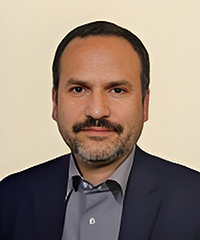
Mahmoud Reza Delavar
Professor, University of Tehran, Iran.
Research Interests: Spatial Data Quality and Uncertainty Modeling, Temporal GIS, Disaster Management, Smart Cities, Land Administration, SDI, Spatial Data Fusion, Spatial Data Science, Spatial Big Data, Urban Growth Modeling.
More Information >>
Prof. Delavar is Director, Center of Excellence in Geomatic Eng. in Disaster Management and Director, Land Administration in Smart City Lab., School of Surveying and Geospatial Eng., College of Engineering, University of Tehran. Dr. Delavar has received a BSc. in Civil Eng.-Surveying from KNT, Iran in 1989, MSc in Civil Eng. -Photogrammetry and RS from University of Roorkee, India in 1992 and a PhD in Geomatic Eng.-GIS from UNSW, Australia in 1997. He was the chair of International Society of Photogrammetry and Remote Sensing (ISPRS) WG IV/3 (Spatial Statistics, Analysis and Uncertainty Modeling), 2016-2022, Chair of WG IV/2 (Artificial Intelligence and Uncertainty Modeling in Spatial Analysis), 2022-2024 and is the advisor of the WG. He is Iran's representative to International Society of Urban Data Management. Prof. Delavar is founder of Iranian Society of Surveying and Geomatics Eng. and is in the editorial board of ISPRS IJGI and GSIS. Prof. Delavar has published more than 420 papers in conferences and Journals and supervised 126 Postgraduate theses and Postdoc research. His research interests are in spatial uncertainty modeling, temporal GIS, smart cities, land administration, SDI, UBGIS, spatial data fusion, urban growth modeling and LULC modeling.
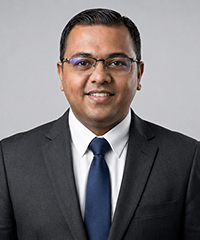
Rohit Thanki
Dr. Detaction AI & Krian Software, Germany.
Research Interests: Artificial Intelligence, Computer Vision, Medical Data Analysis, IoMT, Data Security.
More Information >>
Dr. Rohit Thanki is a Senior AI Researcher and Data Scientist with over fifteen years of academic and industry research experience, and more than eight years specifically focused on AI-powered medical technologies. He is currently based in Wolfsburg, Germany, where he develops and leads regulatory-compliant AI solutions for healthcare diagnostics, medical image analysis, and clinical decision support. His work spans multiple domains including cancer diagnostics, orthopaedic rehabilitation, signal processing, and Software as a Medical Device (SaMD) development.
Dr. Thanki has held key positions in AI R&D leadership, including as Head of Research and Development at Prognica Labs in Dubai, where he spearheaded AI-based breast cancer screening technologies, and as a Senior Data Scientist at KRiAN GmbH in Germany, focusing on AI for orthopaedic diagnostics & rehabilitation. His work involves the end-to-end development of machine learning and computer vision models, including their validation under international regulatory frameworks such as CE marking, FDA 510(k), ISO 13485, and ISO 62304. In addition to his industrial roles, he serves as an active academic supervisor, currently guiding Ph.D. research in AI and medical imaging, and mentoring thesis projects at German and Indian universities.
An accomplished author and researcher, Dr. Thanki has published over 100 Scopus-indexed research papers and more than 50 articles in Web of Science–indexed journals. He has also written or co-authored over 25 academic books with leading publishers such as Springer Nature, CRC Press, and Elsevier. His books cover key areas, including AI in cancer diagnosis, medical image security, the Internet of Medical Things (IoMT), and explainable AI in medicine. Several of his publications are part of prestigious Springer series including SpringerBriefs in Electrical and Computer Engineering, Signals and Communication Technology, and Biomedical Engineering.
His contributions have been widely recognized: he was honored with the Transformational Leadership Award in 2021 (Dubai) for the best deployment of machine learning in healthcare, and he has received multiple Best Paper awards in international conferences. As a recognized thought leader, Dr. Thanki has delivered expert talks and keynote lectures at institutions and international events on topics such as medical image AI, clinical NLP, and SaMD development. He also actively serves as a session chair and technical committee member in global conferences.
Dr. Thanki is a Senior Member of IEEE, a member of the German Society for Artificial Intelligence in Medicine, and the German AI Association. He serves on the editorial boards of BMC Digital Health and Humanities and Social Sciences Communications (Springer Nature) and is a frequent reviewer for top-tier journals such as IEEE Transactions on Biomedical and Health Informatics, Elsevier's Computers in Biology and Medicine, and Springer's Artificial Intelligence Review.
With his deep understanding of both technical AI development and global regulatory landscapes, Dr. Rohit Thanki is uniquely positioned to guide innovators and professionals through the complexities of medical technology (MedTech) compliance. His work bridges science, technology, regulation, and practice, making him an authoritative voice for this practical guide to navigating the MedTech regulatory maze.
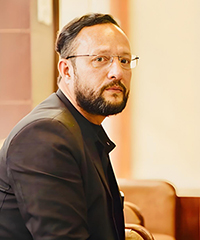
Sudan Jha
Professor, Kathmandu University, Nepal.
Research Interests: Internet of Things, Artificial Intelligence, Quality Assessment and Security issues in IoT devices.
More Information >>
With over 23+ years of combined teaching, research, and industrial experience, Sudan Jha is a Senior member of IEEE and a Professor in the Department of Computer Science & Engineering at Kathmandu University, Nepal. He is lead researcher of the IoT R&D lab at Kathmandu University. His previous affiliations include KIIT University, Chandigarh University, Christ University, etc. He was 'Technical Director' at Nepal Television, 'Principal' at Nepal College of IT, and 'Individual Consultant' at Nepal Telecom Authority.
Prof. Jha is dedicated to advancing higher education quality and actively works on smart platforms. His extensive research portfolio comprises 80+ SCI, SCIE indexed research papers and book chapters in international peer-reviewed journals and conferences. He serves as a Co-Editor-in-Chief in an international journal. He also serves as Guest Editor for SCIE/ESCI/SCOPUS indexed journals. With three patents to his name, he has authored and edited 6 books on cutting-edge topics in IoT, 5G, and AI, published by Elsevier, CRC, and AAP. His research has also secured funding for two international projects.
Additionally, Prof. Jha contributes as a Keynote at more than 40 international conferences. In addition, he has also delivered faculty development programs, short-term training programs, and workshops in national and international conferences, and universities. He holds certifications in Microservices Architecture, Data Science, and Foundations of Artificial Intelligence.
His primary research interests encompass Quality of Services in IoT enabled devices, Neutrosophic theory, and Neutrosophic Soft Set Systems.
Xiangjie Kong
Professor, Zhejiang University of Technology, China.
Research Interests: Urban Computing, Social Computing, Knowledge Management.
More Information >>
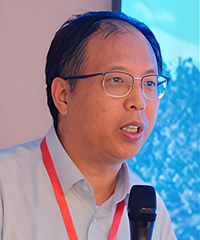
Kong Xiangjie is a professor at the School of Computer Science and Technology, Zhejiang University of Technology, a recipient of the Zhejiang Provincial Outstanding Youth Fund, a Hangzhou Qianjiang Distinguished Expert, a Canal Young Scholar at Zhejiang University of Technology, and the founder and director of the Urban Science and Social Computing Laboratory. He is currently a Distinguished Member of the CCF, a Senior Member of IEEE, a Member of ACM, a Member of the American Society for Research in Science (Sigma Xi), an Executive Committee Member of the Information Systems Committee of the China Computer Federation, an Executive Committee Member of the Ubiquitous Computing Committee of the China Computer Federation, and a Member of the Federated Data and Federated Intelligence Committee of the Chinese Association of Automation. He has served as an editor for several international SCI journals, including PeerJ Computer Science, KSII Transactions on Internet and Information Systems, and Array, and as a (chief) guest editor for several international SCI journal special issues, such as Pervasive and Mobile Computing. He has been invited to serve as the plenary/program committee chair for more than 10 international conferences, including CCVPR, and has delivered plenary/keynote speeches at more than 10 international conferences, including IEEE CCCI. He serves on the Senior Program Committee (SPC/TPC) of several international conferences, including AAAI, IJCAI, KDD, IEEE Big Data, IJCNN, COMPLEX NETWORKS, IEEE UIC, and IEEE ICC. He has published/accepted over 300 papers in international journals and conferences and has consistently been ranked among the top 2% of scientists globally by Stanford University, both in terms of lifetime impact and annual scientific impact.